

The Skinny-Fat Paradox
You know that weird feeling when you step on the scale and everything seems fine, your doctor nods approvingly at your BMI, but then you catch yourself in the mirror and you’re like “wait, what?” Yeah, welcome to the skinny-fat club. It’s this super frustrating place where you’re somehow under-muscled AND over-fat at the same time. Fun times, right?
Here’s the kicker: a healthy diet for skinny fat bodies isn’t about that tired old “eat less, move more” advice. Actually, that usually makes things worse because you end up losing even more muscle (which is literally the opposite of what you need). What you really need is something called body recomposition—basically losing fat and building muscle at the same time. And before you say “that sounds impossible,” it’s totally not.
If you’ve been hunting around for a legit skinny fat diet plan that actually does something, you’re in the right place. We’re about to dive into exactly how to transform your body without living on salads or becoming a cardio zombie.
The Science of Nutrient Partitioning (Don’t Worry, I’ll Make This Fun)
So every time you eat, your body’s basically like “okay, what am I doing with this?” It’s gotta decide: store it as fat or use it to build muscle. This whole decision-making process is called nutrient partitioning, and honestly, it’s pretty important for getting out of skinny-fat territory.
The Muscle Memory Thing is Actually Real
This part’s genuinely cool. When you lift weights consistently, your muscle fibers pick up these extra nuclei (think of them like tiny control rooms). The wild part? Those nuclei stick around even if you stop training for a while. That’s why “muscle memory” isn’t just a saying—rebuilding muscle you’ve had before is WAY easier than starting from scratch. So basically, every workout you do now is like making a deposit in your future muscle bank account.
Your Fat Cells Are Just… Inflated
Good news! Most people dealing with the skinny-fat thing don’t actually have more fat cells than everyone else. Your fat cells are just fuller than you’d like them to be. Picture a bunch of water balloons that got pumped up a bit too much. The awesome part? Deflating them through a proper healthy diet for skinny fat body approach is totally within reach. You’re not battling some genetic curse—you’re just working with what you’ve got.
Training: Time to Hit the Weights (No, Really Though)
Okay, straight talk: if you’re trying to fix skinny-fat with only dieting or running on a treadmill, you’re basically trying to build a house with a toothpick. It’s gonna take forever and the results will be… underwhelming. You absolutely need to lift weights.
Lift First, Cardio Later
Here’s the thing—lifting weights can actually bump up your resting metabolic rate. That means you’re burning more calories just sitting on your couch binge-watching Netflix. Cardio doesn’t really do that. So yeah, weights come first. Cardio can tag along if you want, but it’s definitely the sidekick, not the hero.
The Magic Number: 6-20 Reps
You’ve probably seen those super buff dudes doing crazy heavy weight for like 3-5 reps. That’s cool for getting stronger through nervous system gains, but it’s not the best for actually making your muscles bigger. For growing muscle (which is what you desperately need), stick to that 6-20 rep range. This keeps your muscles working longer—that “time under tension” thing everyone talks about—and that’s what makes them grow.
Compound Lifts Are Your Bread and Butter
Think of these as building your foundation:
- Squats for legs and core (yes, they suck, do them anyway)
- Deadlifts for basically your entire backside
- Bench Press for chest and triceps
- Overhead Press for shoulders
These aren’t optional. They work multiple muscle groups at once, so you get way more bang for your buck. Plus, you’ll feel like a total badass doing them.
Isolation Work: The Cherry on Top
Once you’ve got your compound movements down, isolation exercises are what give you that aesthetic V-taper look (you know, wider shoulders, narrower waist). Focus on:
- Lat work like pull-downs and rows to widen your back
- Upper chest stuff like incline presses
- Side delt raises to build those shoulder caps
This is where you start looking like you actually lift.
Progressive Overload: The One Rule You Can’t Break
Here’s the golden rule that nobody wants to hear: you HAVE to do more over time. More weight, more reps, more sets—something’s gotta go up. If you’re benching the same 135 pounds for the same 8 reps six months from now, your body’s just gonna shrug and say “why bother changing?” Track your workouts and make sure you’re actually progressing.
Nutrition: Where the Real Magic Happens
Alright, let’s talk about the skinny fat diet plan that actually works. Spoiler: it’s not some crazy keto-paleo-intermittent-fasting-juice-cleanse thing.
Eat at Maintenance (I Know, Sounds Crazy)
This is the secret sauce everyone misses. You don’t need to be starving yourself. Eating at or just barely below your TDEE (that’s your total daily energy expenditure—basically how many calories you burn in a day) gives your body enough juice to build muscle while slowly chipping away at fat. Yeah, it’s slower than crash dieting, but you’ll actually look good at the end instead of just… smaller and still soft.
Protein is Your New Best Friend
If you only remember one thing from this entire article, make it this: EAT. ENOUGH. PROTEIN. We’re talking 0.7g to 1g per pound of body weight. If you weigh 150 pounds, that’s 105-150g of protein daily. If you prefer metric, that’s 1.8-2.2g per kilogram.
Why so much? Three reasons:
- Keeps you full way longer (goodbye, random snacking)
- Burns calories just being digested (high thermic effect, fancy!)
- Gives your muscles the building blocks they need to grow
And don’t just eat it all in one meal like some kind of protein monster. Spread it across 3-4 meals throughout the day. Your body can only process so much at once, so eating 150g of protein at dinner doesn’t really work.
Carbs Aren’t Evil (I Promise)
Can we please kill this myth already? Carbs don’t make you fat. Eating too many total calories makes you fat. Carbs are actually super important for crushing your workouts and keeping your muscles intact. When you’re lifting hard, your muscles need glycogen (that’s stored carbs) for fuel. Without enough, your body might start breaking down muscle for energy. Not cool.
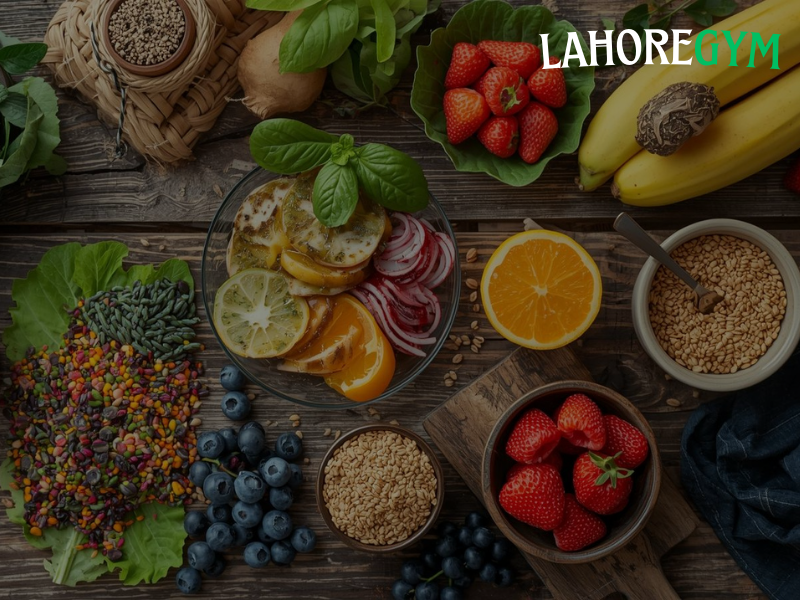
Stick to whole food carbs like rice, oats, potatoes, and fruit. They give you steady energy without the blood sugar rollercoaster that makes you want to eat your own arm at 3 PM.
Eat Real Food Most of the Time
Here’s something people don’t talk about enough: eating mostly whole, minimally processed foods just works better for body composition. Your energy stays more stable, you feel better overall, and your results come faster.
A solid healthy diet for skinny fat transformation includes:
- Lean proteins: chicken, fish, eggs, Greek yogurt
- Complex carbs: rice, oats, quinoa, sweet potatoes
- Healthy fats: avocado, nuts, olive oil
- Vegetables: as many as you can handle for fiber and nutrients
Nothing fancy, just real food.
Different Strategies for Different Folks
Not everyone’s starting from the same spot, so let’s get specific.
If You’re a Guy
Focus hard on building wide lats and broad shoulders. This creates an optical illusion that makes your waist look narrower even before you’ve lost that much fat. It’s all about that shoulder-to-waist ratio, baby. Hammer those pull-ups, lat pulldowns, and side raises like your life depends on it.
If You’re a Woman
Let’s get this straight right now: lifting weights will NOT make you bulky. You literally don’t have enough testosterone for that without some serious pharmaceutical help. What lifting WILL do is give you the metabolic foundation to stay lean without being on a diet 24/7. Plus, having muscle is what gives you that “toned” look everyone’s after. Cardio alone just makes you a smaller, softer version of yourself.
If You’ve Got South Asian Genetics
There’s definitely a pattern some folks deal with—especially if you’ve got South Asian heritage—where fat loves to hang out around the hips and lower chest. The good news? Same principles apply, you just might need to be extra patient with those stubborn areas.
If you’re vegetarian or prefer plant-based proteins, no worries:
- Paneer (that Indian cottage cheese is protein-packed)
- Tofu and tempeh (don’t knock it till you try it)
- Sprouted lentils and beans
- Greek yogurt if dairy’s your thing
- Good quality protein powder
Just make sure you’re hitting those protein numbers—it takes a bit more planning without meat, but it’s totally doable.
The Lifestyle Stuff You’ll Roll Your Eyes At (But Actually Matters)
Training and eating right are like 80% of this whole thing. But that last 20%? It’s more important than you think.
Sleep Isn’t Negotiable
Getting 7-9 hours of solid sleep is huge for recovery and keeping your hormones balanced. When you’re well-rested, your workouts feel better, you’ve got more energy, and your body just works better overall.
If you’re crushing it in the gym and eating perfectly but only sleeping 5 hours a night, you’re basically shooting yourself in the foot. Don’t be that person.
Get Your Steps In, Chill Out More
Try to hit at least 7,500 steps daily. This isn’t about burning calories—it’s about staying active throughout the day and not being a complete couch potato between workouts. Daily movement just helps everything work better.
Also, being stressed all the time makes losing fat way harder. Find whatever works to decompress—meditation, yoga, gaming, whatever. Just manage your stress somehow instead of letting it wreck your progress.
Think About Your Cooking Oils
Quick tip: the oils you cook with can make a difference. Try using olive oil, avocado oil, or coconut oil instead of those super processed vegetable oils when you can. Lots of people find they just feel better with these choices.
Supplements: The 5% That Might Actually Help
Real talk: supplements are called supplements for a reason. They’re supposed to supplement an already solid diet and training program, not replace them. But yeah, a few are actually worth your money.
The Ones That Actually Work
Creatine Monohydrate: This is like the most studied supplement in existence. It helps with workout energy and can make your muscles look a bit fuller by pulling water into them. Just take 5g a day. It’s cheap, it works, end of story.
Whey Protein: It’s not magic—it’s just convenient. If hitting your protein target through regular food is a struggle, a scoop or two of whey makes life way easier. That’s literally it.
Omega-3 Fish Oil: Good for overall health, super popular with fitness people. If you’re not eating fatty fish a couple times a week, throw in a supplement.
Vitamin D: Most of us don’t get enough sun. It’s important for muscle function and just feeling good in general.
Save Your Money on These
Fat burners, testosterone boosters, fancy BCAA powders—just don’t. They’re either barely effective or complete snake oil. Take that money and buy some quality steak instead.
Tracking Progress: Why the Scale is Basically Useless
Here’s something that’ll mess with your head: when you’re doing body recomposition right, the scale might not budge much. You might even GAIN weight while looking way leaner. How? Because muscle takes up less space than fat even though it weighs more.
What You Should Actually Track
Waist Measurement: Grab a tape measure and check your waist around your belly button. For guys, watching this number go down is way more meaningful than what the scale says.
Progress Photos: Take monthly pics in the same spot, same lighting, same time of day. You’ll see changes that the scale is completely blind to.
Strength Numbers: Are you adding weight or reps to your lifts? That’s legit progress. If your bench went from 135 for 8 reps to 155 for 8 reps, you built muscle. Period. The scale doesn’t know what it’s talking about.
How Your Clothes Fit: Pants getting loose around the waist but tighter in the thighs? Perfect. That’s exactly what you want.
The Long Game: Patience Beats Everything
Here’s the truth nobody wants to hear: this takes time. You’re not gonna transform in 30 days or even 90 days. But in 6-12 months? You won’t even recognize yourself.
The beautiful part about this approach is that you can actually stick with it. You’re not starving, you’re not doing cardio for hours, you’re not miserable. You’re building a stronger, leaner body while eating like a normal human and getting stronger every week. That’s sustainable. That’s a lifestyle you can maintain instead of another diet you’ll quit after three weeks.
Time to Get Started
Keep it simple:
- Find a 3-day full-body workout with the big compound lifts
- Figure out your protein needs and start tracking it (use an app, it’s 2026)
- Take your measurements and photos TODAY (you’ll thank yourself later)
- Stick with it for at least 12 weeks before you judge anything
Remember, the healthy diet for skinny fat transformation isn’t about being perfect every single day—it’s about being consistent most days. Show up, do the work, trust the process. Future you is gonna be so glad you started today instead of waiting for “the perfect time” that never comes.
Disclaimer: This content is for informational and lifestyle purposes only. It is not intended to diagnose, treat, cure, or prevent any disease or health condition. The information provided here is for educational purposes regarding fitness and nutrition concepts. Always consult with qualified healthcare professionals, registered dietitians, or certified fitness trainers before making significant dietary changes or starting any new exercise program, especially if you have existing health conditions, injuries, are taking medications, or have special needs. Individual results may vary significantly, and this plan may not be suitable for everyone. The author and publisher are not responsible for any adverse effects or consequences resulting from the use of any suggestions, preparations, or procedures discussed in this article.