

This isn’t another crash plan.
No miracle shakes. No starvation.
Just a weekly program that actually fits your life.
Balanced nutrition. Smart workouts. Sleep and stress handling. Small, steady wins.
If you want to lose fat and keep it off, you need a plan that teaches your body what normal looks like. That’s what this is.
Why Balance Beats Extreme Diets
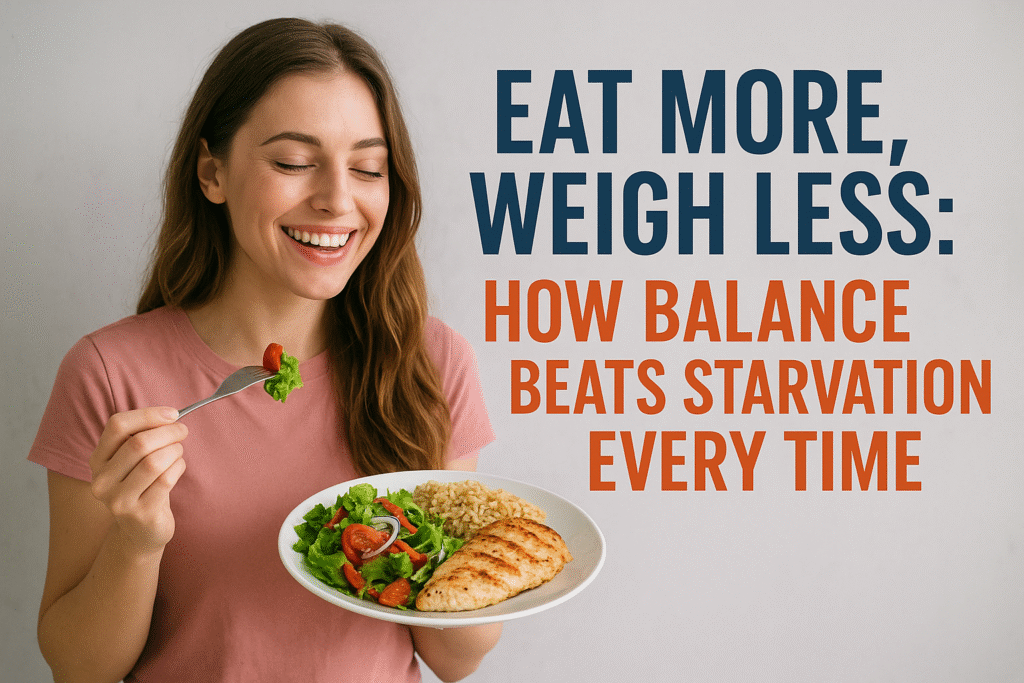
Quick fixes are tempting. They work—briefly. You drop weight fast. Then the crash. Then the rebound. You know the story. Balance beats extremes because it preserves muscle, keeps hormones steady, and makes the whole thing sustainable.
Balanced nutrition for weight loss means meals that combine protein, fiber-rich carbs, and healthy fats. You get full. Your workouts don’t suffer. Your mood doesn’t tank. That’s Topical Authority right there—this program pulls together nutrition science, behavior, and training into something you can actually do for months, not days.
The Nutrition Framework (Simple and Flexible)
Think plate strategy. No obsessing.
- Half the plate: colorful vegetables (fiber + micronutrients).
- Quarter plate: lean protein (chicken, fish, eggs, beans, tofu).
- Quarter plate: complex carbs (brown rice, sweet potato, oats, quinoa).
- Add: a thumb-sized serving of healthy fats (olive oil, avocado, nuts).
Aim for a small calorie deficit — about 300–500 kcal/day below maintenance. Not brutal. Enough to get steady fat loss. Protein target? Around 1.2–1.6 g/kg bodyweight daily to protect muscle while losing fat. Drink water. Sleep. Move more outside workouts (NEAT = daily activity).
Sample day of eating (real, not bland):
- Breakfast: Greek yogurt, berries, 1/4 cup oats, sprinkle of almonds.
- Lunch: Grilled chicken bowl — brown rice, mixed greens, roasted veg, tahini drizzle.
- Snack: Apple + 1 tbsp peanut butter.
- Dinner: Baked salmon, quinoa, big steamed broccoli.
- Optional small treat: one square of dark chocolate or a modest dessert.
This is a sustainable weight loss diet plan. It’s flexible. It doesn’t demand perfection.
The Weekly Workout Plan (No Gym Needed)
You don’t need fancy equipment. You need consistency.
- 3 strength days (bodyweight or light weights): helps preserve muscle and raise resting metabolism.
- 2 cardio days (30–40 min steady-state or intervals): walking, jogging, jump rope, cycling.
- 1 active recovery day: long walk, yoga, mobility.
- 1 reset day: light movement + meal prep.
Workouts last 25–45 minutes. Enough to be effective. Not so long you skip them.
Example strength session (30 min):
- Warm-up (5 min brisk walk or dynamic moves).
- Circuit x 3 rounds: 10 push-ups, 15 squats, 10 reverse lunges per leg, 30s plank.
- Finish with 5 minutes stretch.
Intervals example (20–25 min): 1 minute hard, 1 minute easy x10. Done.
Day-by-Day Breakdown (Practical Plan You Can Follow)
Day 1 — Kickstart (Habits & Hydration)
- Focus: set baseline. Drink 2–3 liters of water.
- Meals: Balanced (see plate).
- Movement: 30-min brisk walk.
- Tip: Log meals, but keep it simple — photo or brief notes.
Day 2 — Strength at Home
- Focus: full-body resistance.
- Workout: 30–35 min strength circuit.
- Meals: prioritize protein at each meal.
Day 3 — Active Recovery
- Focus: mobility + NEAT.
- Movement: 45–60 min moderate walk, stretching.
- Meals: lots of veggies, lighter carbs.
Day 4 — Fat-Burning Circuit
- Focus: higher intensity.
- Workout: 20–30 min interval circuit (bodyweight + short cardio bursts).
- Meals: carbs timed around workout for performance.
Day 5 — Protein Focus
- Focus: muscle recovery + protein.
- Meals: lean protein emphasis (fish/lean beef/legumes).
- Movement: light strength, mobility.
Day 6 — Mix Cardio + Strength
- Focus: combo day.
- Workout: 20 min intervals + 20 min resistance.
- Meals: balanced, include healthy fats.
Day 7 — Reset & Prep
- Focus: meal prep, plan next week, sleep and hydration check.
- Movement: gentle yoga or long walk.
- Tip: reflect—not judge—on the week. What worked? What didn’t?
Sleep, Stress, and Recovery — Non-Negotiables
Losing fat is not only food and movement. Sleep and stress are huge. Poor sleep spikes cortisol. High cortisol makes fat loss harder, especially around the middle.
Aim for 7–8 hours of solid sleep. Build a wind-down routine: dim lights, no screens 30–60 minutes before bed, and avoid heavy late meals. Use breathing or a short walk to manage stress. Small rhythm changes = big results.
How to Track Progress Without Obsessing
Scale not moving? Look elsewhere. Measure:
- How clothes fit.
- Progress photos (weekly).
- Strength gains (more push-ups, heavier squats).
- Energy and sleep quality.
Weigh once per week, same time, light clothing. Don’t let daily fluctuations derail you. Habits matter more than any single weigh-in.
Common Mistakes & Quick Fixes
- Mistake: Cutting calories too low. → Fix: raise protein, add veggies, reduce portion sizes slowly.
- Mistake: Ignoring strength training. → Fix: 3x/week bodyweight sessions.
- Mistake: Over-relying on “low-fat” packaged foods. → Fix: pick whole foods. Read labels.
- Mistake: All-or-nothing mindset. → Fix: 80/20 rule. Real life allowed.
Wrap-Up (Small Steps, Big Wins)
This 7-day program is a template. It teaches balance. It builds authority across topics: nutrition, exercise, recovery, behavior. Follow it for a month, iterate, and then adjust calories and intensity as you progress.
Short story: I once tried a brutal 10-day crash. Felt horrible. Ate a full pizza on day 6 and swore off “quick fixes.” Now? Balanced plates, regular workouts, sleep. Lost fat. Kept muscle. Felt human the whole time. That’s the point.